
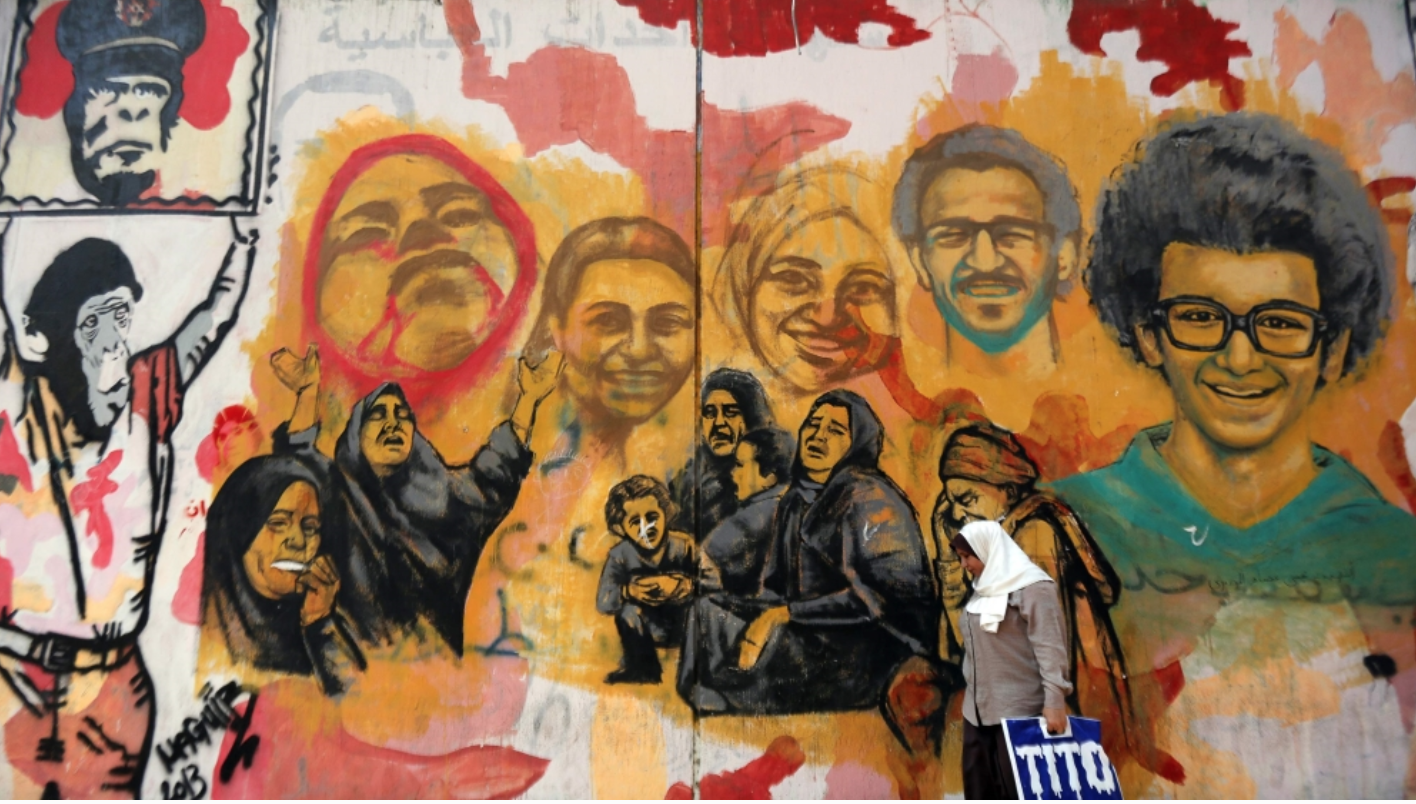
On the 14th of August 2014, I woke up to a call on my work phone from the head of security of the company I used to work for. The call was short and clear: stay home, do not come to work today. Supporters of the Muslim Brotherhood had been holding a massive sit-in for almost two months, protesting the military coup and the illegal detention of the former president, Mohamed Morsi. A few hours after the call, I heard gunshots. From my window in my small apartment in Nasr City, I captured a chilling video of civilians trying to escape the military’s heavy gunfire in the narrow side streets of my neighborhood. The events would later be referred to as the “Rabaa massacre.” Hundreds were shot in cold blood, thousands were captured and sent to high-security military prisons, and a wave of Islamic terrorism and military violence swept across the country.
The head of the Egyptian Armed Forces lied when he promised he had no interest in ruling the country. General Abdelfattah El-Sisi ran for the presidency and won by a massive margin, securing more than 98% of the votes. Egypt is, to this day, ruled by a military dictatorship. I have never seen Egypt more depressed and grim. My revolutionary friends stopped talking about the revolution. Many activists were hunted down, and Egypt’s security forces began carrying out “systematic forced disappearances” targeting human rights activists and many citizens. As if that were not enough, security forces also began practicing extrajudicial executions.
The message was clear: get out or fall in line. The brain drain that followed the revolution is one of the most tragic events, with long-lasting implications for Egypt’s economy, development, and the fight for liberty for generations to come. Among my cohort that graduated from the American University in Cairo in biological sciences, only one out of 12 highly qualified individuals still lives in Egypt. I immigrated to France. My friend Ahmed Diab is continuing his postdoctoral studies in the US. My talented friend Dorra, a highly skilled programmer, moved to Berlin. Behairy, a mathematics genius, moved to Boston. Belal and his family relocated to Berlin. Barakat, one of the most talented graphic designers and the co-founder of G-Lounge, moved to Arizona with his wife Sara, who is one of the most influential and passionate leaders in biomimicry and sustainability. Three out of three of my former bosses emigrated with their families to Europe and the US. Many renowned writers, scientists, filmmakers, and artists, such as Alaa Al-Aswany, Amr Waked, and Belal Fadl, have also left the country. The list is long, sad, and terrifying.
When I visit Egypt now, I see the ruins of dreams. It feels like a walking dead country. The media continues to push military regime propaganda and empty promises. The value of the Egyptian Pound plummeted from 6 EGP to the Euro in 2010 to 20 EGP to the Euro in 2016. The percentage of people living below the poverty line rose from 16.7% in 2000 to a staggering 32.5% in 2018. The oppressive military regime still tries to convince the Egyptian people that they will reap the benefits of reform in the years to come, but the situation keeps getting worse.
Will Egypt survive another wave of uprising? What will happen in the future is uncertain, and it’s reasonable not to have a very positive outlook on what’s to come. Will the highly talented innovators, entrepreneurs, and executives ever return?
I have discussed this topic extensively with many of my friends who gave up and left. I can confidently say that they do not want to look back. They want to start over in the West, where their talents are appreciated, where human rights are respected, and where their humanity is valued. They seek a future for their families that is different from their sad and agonizing past. This is the modern tragedy of Egypt: the country has lost its heart and soul to the guns and tanks of the generals.
 On the Search for Home