
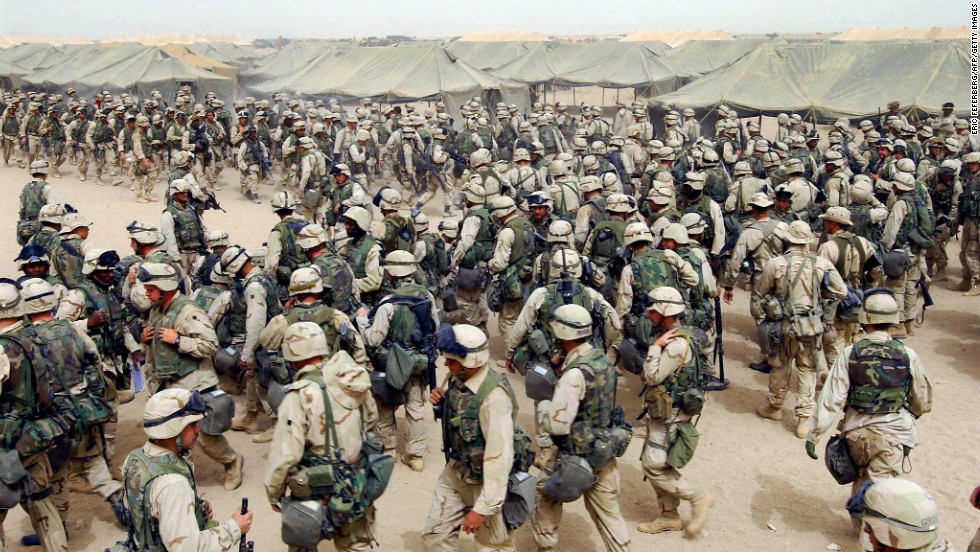
Given my humble background as a kid who grew up in the remote and underdeveloped Dakhla Oasis, studying abroad in the US could only be a fantasy. However, thanks to a very generous USAID program, organized by the US embassy department of state, I was lucky enough to be selected to do a study abroad program in California. That was in 2007 and the US had a keen interest in bridging the cultural gap between the Middle East and the US, specially after the tragic events of 9/11 in 2001 and the invasion of Iraq in 2003. Because the program was cultural in nature we moved between the major cities of California to grasp as much as possible of the west coast american culture. My program contained another Egyptian, a Pakistani, A Lebanese, a Moroccan and a Yemeni. Although I lived in Egypt, it was the first time I met any of those nationalities, except for the other Egyptian of course.
When my plane took off from Cairo International Airport in the direction of Charles De Gaulle International airport in Paris, I was ecstatic. It was the first time I ever left Egypt. When my plane landed in LA International Airport, I was emotional. One of my childhood dreams just came true, and one of my fantasies moved from the realm of fiction to the realm of reality. I then took another local flight from LAX to Fresno Yosemite International Airport. There, things felt different. When I went through passport control in LAX the process was smooth. They had a look at my file with all my university papers, they double checked some data and they wished me a pleasant stay. In Fresno there was uncomfortable silence and even the most basic of questions like “what is your business here, sir?” made my voice quiver when I tried to answer because the questions were asked with a stern face and concerned looks.
At that time (post 9/11) people in the US and people in the Middle East were asking the same exact question: why do they hate us? All the thoughts that were in my head when I landed were around that question: Do they think I hate them? Do they have any idea how happy I am to be here? Anyways, I left the airport with no trouble to my dorms room. The resident advisers were all friendly and excited to know I come from Egypt. Many of them recognized it as the land of Pyramids and many of them made biblical references to Moses and the Exodus and the songs in the famous musical “Prince of Egypt”. Luckily, no one asked me if I could “walk like an Egyptian”.
I have already been exposed to American culture and American students in the American University in Cairo where I used to study. I discussed with many of them the politics of the Middle East and American foreign policy (Although my English was terrible at the time). Now I am on American soil and I have a million questions and I could not wait to have heated debates and discussions around such topics. At the end of the day the whole objective was to bridge the cultural gap between the Orient and the Occident. To say I was shocked by the discussions I had would be an understatement. Most of the people I met in Fresno State University did not know where Egypt is located on the map. Many of them did not even know where the Middle East is on the map. Many students asked me if my family owned camels. My microbiology teacher, in a trip to a water treatment facility, asked me how we “fetch” water from the Nile in Egypt. I even replied sarcastically that we lineup by the river every morning holding our buckets over our heads. There was a staggering ignorance of American Foreign policy and the role the US plays in the region ,as the only super power in the world. But in Fresno I met a Palestinian student who was very quick to welcome us to her campus. She spoke perfect Arabic with a beautiful Palestinian accent. It is silly to speak about the Middle East and not talk about the Israeli/Palestinian crisis, but I will write separately about that topic. My Palestinian friend invited us to her family house in many occasions. I could not wait for the next invitation because in their house I ate the most delicious food of my entire life. We spoke about everything in their house except for Palestine. I tried to bring the topic up once on a dinner conversation but her father shut me down quickly. It was clear the topic was painful so I respected his wish. I spoke to my friend many times for long hours about her own family’s diaspora and how she felt about the Middle East. My friend always said that she is American and she Identifies as American but Palestine was close to her heart. Her position against Israeli occupation of the West Bank was driven from her deep believe in American values of justice and that nations should have the right to sovereign governance and her belief that her roots run deep in Palestine. I asked her what she thought about the “right to return” for the Palestinians that were expelled from their lands post the 1948 war and if her family wishes to return one day. She could not really answer that question. All she said was that she is American and she wishes to continue her life in the US.
After a few months in Fresno we visited San Francisco. San Francisco in 2007 (maybe until now) was the most liberal and progressive city on earth. There, people knew about the Middle East. There, people knew about the Israeli/Palestinian crisis and there people were protesting against the war on Iraq. I was privileged to have met and conversed with many members of the LGBTQ community; although at the time I did not really know what to make of it given my very conservative up bringing in Egypt where such a topic is a big taboo. But the most bizarre experience for me was when we got invited to the Rotary Club. We were asked to prepare a presentation on one specific topic: Jihad. I tried to distance myself as far as possible from that word and that topic from the very first moment I sat foot on US soil. My Yemeni friend volunteered to explain the topic. Jihad is an Arabic word for “to resist”. However, it is the word used by Islamic extremists to fight against the west and imperialistic powers. It became almost synonym with terrorism. She did a great job trying to restrict the word to its very mystical definition where “resisting your desires is the highest form of resistance”. Then the main speaker of the rotary club gave a speech on co-existence, peace and that mutual understanding of differences in cultures are the only way to prevent wars.
After San Francisco we went to LA. If San Francisco is the cultural capital of California, LA is the fun capital of California. We had no time to discuss anything with anyone. It was all parties, smoking, dancing and other fun stuff. But in LA, I could see the race problem in the US. Certain neighborhoods were blacks only, other neighborhoods were whites only. At the moment LAPD had a rich record of discrimination and violence against colored minorities. Most of the student body discussions revolved one way or another around topics of minorities. No one really cared about the US foreign policy, no one really cared about the Middle East and certainly no one was asking; why do they hate us?
The rest of our stay was merely academic. My visit to the US made me realize that in the Middle East we do not really understand American democracy. When we watch the news on Arabic news networks and we see what the Americans had done to Baghdad many of us would think that the American people enjoy such destruction and cruelty. In fact most Americans I met did not even know what was going on in the Middle East. Many of them did not even know where the Middle East is and what countries are in it. They do not hate us, it is just many of them are unaware and many of them are indifferent. Those who were aware in San Francisco had great sympathy and they went in demonstrations against the war. Middle Easterns also do not hate Americans, they hate American foreign policy. They hate how war was so easy for the Bush administration. I do not think the program bridged the cultural gap, it just explained it.
Twelve years after I met my Palestinian friend I see that on her facebook profile picture she put a picture of herself with the Palestinian flag captioned “we will return”. I wonder what happened to her and her family to feel the US is no longer home. I wonder if the Trump rhetoric and policies made her and many Middle Easterns feel unwelcome even though they were born and raised in the US, even though their families immigrated legally and lived peacefully in the orange county. But this topic is long, and tricky and it deserves its own chapter/s. stay tuned for my next post.
 On the Search for Home