A State of Fear

Today marks a significant event in my life. Today was the first time I felt it is unsafe to go back to Egypt. My self imposed exile moved from an area where I felt Egypt is not a happy place to live in, to Egypt is an unsafe home to visit. The escalation is serious and extremely upsetting.

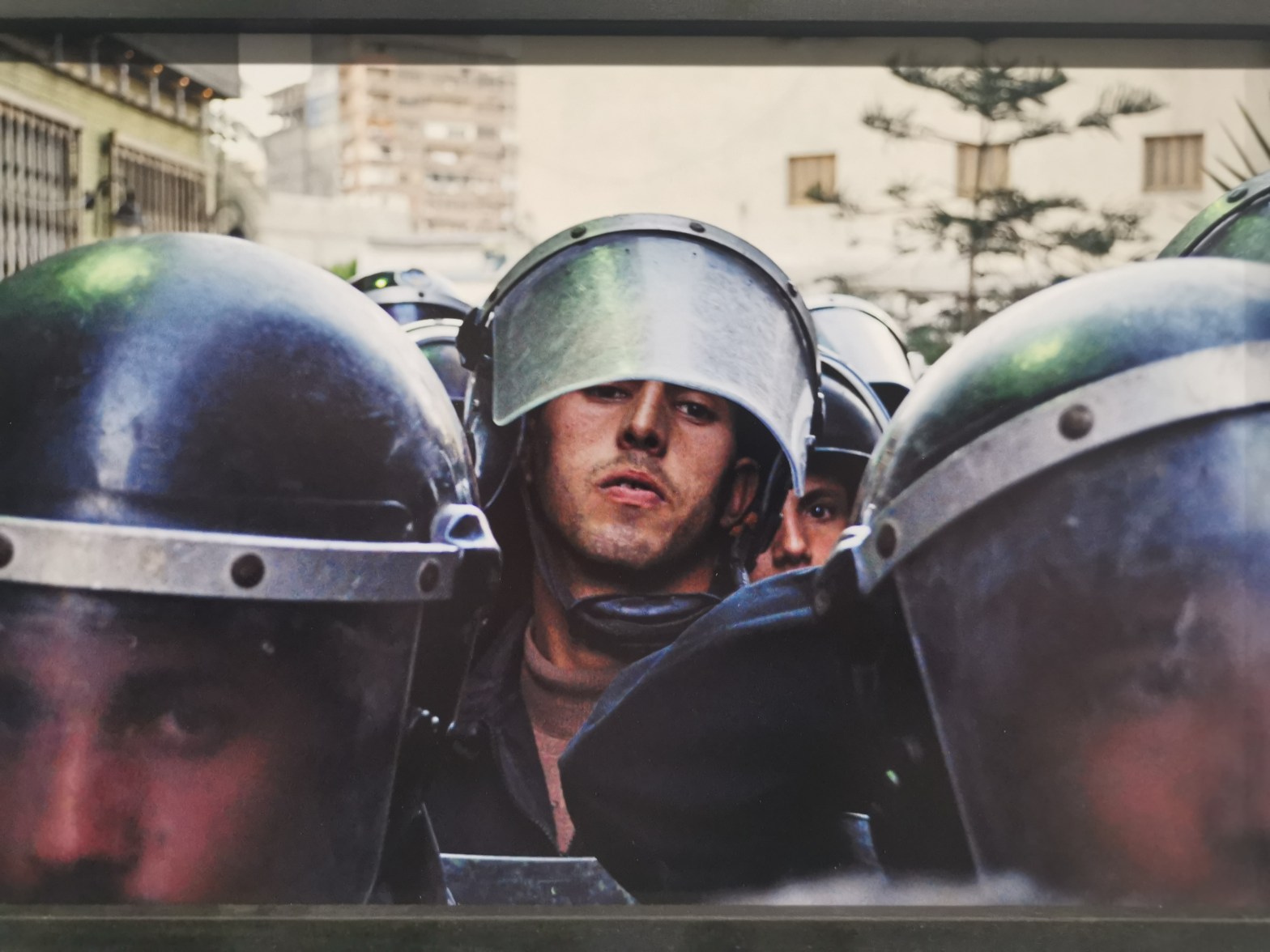
A few weeks ago a private contractor who worked for the Armed Forces made a series of videos exposing financial corruption in high ranks in the Army and talked about several construction projects that both drained the tax payers money and were unnecessary. The contractor, Mohamed Ali, called for people to show El-Sisi and his regime that they are not afraid and called for mass protests. In several cities across Egypt people took to the streets. In the days that followed the biggest wave of detention since 2013 took place. Over 1700 people got arrested. Many activists, lawyers, column writers, university professors and bloggers were kidnapped and many of them are being kept in secret locations. Their families cannot reach them, their lawyers cannot talk to them and the state is silent.

In the 19th of September 2019, the state kidnapped the brother of Wael Ghoniem to force him to shut up. Wael Ghoniem is a prominent political figure who also lives in self-imposed exile in California. But Hazem Ghoniem, the brother of Wael Ghoniem, is not the first. There is a long list of similar cases that includes the daughter of Youssef Al-Karadawy, the brother of Moutaz El Demerdash and many other innocent people whose only crime is that they share blood with political opposition. The strategies of the Egyptian state stooped to a new low: Kidnapping family members to force opposition to shut up.

Of course I felt scared to go back home for a vacation that was supposed to start tomorrow. People have their phones searched (extra judicially) in airports, then they are taken away to unknown location, then they are tortured and charged with fabricated cases and their lives are ruined.

The days of El-Sisi regime are numbered and like all dictators who preceded him he also will fall. I hope this time he and his thugs will get the punishment they deserve.

This post is independent from the rest of the chapters. Chapter 8 and the following chapters will talk more about Egyptian regime, oppression, illegal detention, torture and death in Egyptian prisons and more….

Chapter 7.2: On Est Tous Des Sauvages

In the years that followed the end of WWI there was a rise in pan-arabism in the Middle East. The Ottoman Empire was on free fall and many Middle Eastern states including Egypt, Syria and Iraq started calling for an Arab movement that would lead to independence from the rule of Great Britain. The jews who settled in Palestine were following the news with fear and confusion. The first real riot happened in April 1920 where 4 jews and 5 arabs were killed. In May 1921 Arabs attacked the jewish settles in Jaffa. In the meanwhile, a Muslim scholar by the name Izz ad-Din Abd al-Qadar Ibn Mustafa Ibn Yusuf Ibn Muhammad al-Qassam started preaching Islamic Jihad in Palestine. He called for an armed revolution against the British and the Zionists in Palestine. The response of the Zionist movement was the establishment of the Haganah. Haganah would later become the core of the Israeli Defence Forces. The atrocities that were committed by both Qassamites and Haganah in the great Arab revolt of 1936-1939 are unspeakable.

It was pretty clear by 1939 that all dreams of organic introduction of Jews in the Middle East are dead. Arab nationalists endorsed the direction of Hitler and Mussolini. Copies of Arabic translation of “Mein Kampf” were being sold in Cairo to Baghdad. In 1941 the Muslims of Baghdad rose against the Iraqi Jews in what is called the “Farhud”. In a surreal medieval scene Muslims were chasing after Jews in the streets of Baghdad with swords. Iraq would lose all its Jewish population by 1950. A similar fate awaited the Egyptian Jews and Nasser effectively drove all of them out of Egypt after the 1956 war.

The situation in Europe was much darker for the jews. By the time WWII is concluded, the jewish population would shrink by one third. In 29 November 1947 the United Nations adopted the Partition Plan for Palestine, which planned to divide Palestine into an Arab state, a Jewish state, and the Special International Regime encompassing the cities of Jerusalem and Bethlehem. In May 1948 a war would break out between Israel and several Arab states. The result of that was was the defeat of Arab forces and the expulsion of more than 700,000 native Palestinians creating the current refugee crises. What was done to the Palestinians was horrible and unjustified. There was mass slaughter and forced displacement but the international community could not do anything simply because the memory of the holocaust was just too fresh. No one dared confront the Israelis with the atrocities they were committing. The survivors of the holocaust became the perpetrators and replicated what has happened to them in Europe in the Middle East. In 1967 Israel would launch a full scale war and become an occupying force. Israel went on and built the Dimona nuclear plant and is the only country in the Middle East to possess nuclear weapons. This is driving a nuclear race in the region with Iran leading in the front.

Until now the West bank of Palestine, Golan Heights of Syria and the Jordan Valley are still under Israeli occupation. Palestinians have been living in suffering and misery for more than 50 years. The far right has been on the rise in Israel and Israel has become just like its neighbors: a racist, radical and regressive society.

The tragic story of Palestine is, as seen in the Middle East, the manifesto of Western Imperialism. All Jihad movements from Al-Qaeda, ISIS, and Al-Mujahidon revolve around the Palestinian case. To be honest I do not see any viable solution to the Israeli/Palestinian crises. Both states are fueled by hatred and racism. Many Israelis see Arabs as animals and barbarians. Many Arabs see Israelis as monsters and blood thirsty. You put all those elements together and realize that no one is innocent in the Middle East.

For what it is worth I strongly suggest for you to read the book “My Promised Land: The Triumph and Tragedy of Israel” by Ari Shavit. This books gives a deep, balanced and comprehensive view of the Israeli/Palestinian crisis.

Chapter 7.1: The Elephant in the Room

It is silly to discuss the Middle East and the Middle Eastern diaspora and not discuss the Israeli/Palestinian crisis. If the aftermath of world war two instilled a sense of calmness and stability in Europe, it led to an upheaval in the Middle East. But the story begins much earlier, precisely in 1897 when Rt. Honorable Herbert Bentwich led a Zionist pilgrimage to Palestine. Mr Bentwich and his colleagues traveled from the port of Jaffa to Ramallah and all the way to Jerusalem with the company of 21 Zionists. He saw the barren land with scattered native Palestinians villages which were infested with Malaria but for some reason he did not see the natives. He made his mind that the jews must go back to their historical homeland, Judea. Meanwhile, Theodor Herzle, the spiritual father of Israel, was interested in the report to be written by Bentwich mainly because he wanted to learn more about the inhabitants of Palestine and the prospect of having the Jews of Europe immigrate and establish a Jewish state in Palestine. The report turned out very romantic and empty of important details on the native population and how such an immigration can unsettle a whole nation.

It is very important here to understand why a group of wealthy and comfortable European Jews would fantasize about building a state in a desert land in the most dangerous place on earth that has no oil. The answer to that question lies in Eastern Europe. Jews lived in ghettos and were systemically discriminated against. From time to time there would be a pogrom in Russia, Austria or Poland and WWII would prove the extent of such discrimination. They had no liberty and no sovereignty. Another factor was that the Jewish identity was being erased by modernization. The whole western world was in a transition to secular modern states. Herzle saw those dangers to the Jews and Jewish identity and decided that the solution is to restore the past.

The initial approach was to have an organic introduction of the Jews in Palestine which fell in the territories of the Islamic Ottoman Empire (yet controlled by Great Britain). Indeed, many Jews started buying lands from Egyptian Jews, Palestinian villagers and others. They started building kibbutzim with the first kibbutz, established in 1909 in Degania. However, one person in the pilgrimage of 1897 saw the Arabs of Palestine and he believed a peaceful co-existence was not possible. By 1897 there was at least half a million Bedouins, Arabs and Druze in Palestine. There were twenty cities and town and hundreds of scattered villages and agricultural communities. Unlike Bentwich who thought the land was big enough to be home to both Arabs and Jews, Israel Zangwill sees the Arabs. He sees the Palestinian cities of Jaffa, Lydda, Ramallah and he sees the villages of Abu Shusha and Abu Kabir. Seven years after the pilgrimage he delivers a speech in New York and states that Palestine is populated and the only way the Jews can go back to their “Promised Land” is by force. He argues that no populated country was taken without force. He concludes that if the Sons of Israel want to make a come back to their lands they have to “To drive out by sword the tribes in possession, as our forefathers did”. This was the moment two streams of Zionism emerged: a stream that pushes for an organic introduction of European Jews and the creation of a melting pot for Jews and Arabs and another stream that is determined to cleanse the promised land of the Jews from all “Arab Impurities”.

Chapter 6: The California Experience

Given my humble background as a kid who grew up in the remote and underdeveloped Dakhla Oasis, studying abroad in the US could only be a fantasy. However, thanks to a very generous USAID program, organized by the US embassy department of state, I was lucky enough to be selected to do a study abroad program in California. That was in 2007 and the US had a keen interest in bridging the cultural gap between the Middle East and the US, specially after the tragic events of 9/11 in 2001 and the invasion of Iraq in 2003. Because the program was cultural in nature we moved between the major cities of California to grasp as much as possible of the west coast american culture. My program contained another Egyptian, a Pakistani, A Lebanese, a Moroccan and a Yemeni. Although I lived in Egypt, it was the first time I met any of those nationalities, except for the other Egyptian of course.

When my plane took off from Cairo International Airport in the direction of Charles De Gaulle International airport in Paris, I was ecstatic. It was the first time I ever left Egypt. When my plane landed in LA International Airport, I was emotional. One of my childhood dreams just came true, and one of my fantasies moved from the realm of fiction to the realm of reality. I then took another local flight from LAX to Fresno Yosemite International Airport. There, things felt different. When I went through passport control in LAX the process was smooth. They had a look at my file with all my university papers, they double checked some data and they wished me a pleasant stay. In Fresno there was uncomfortable silence and even the most basic of questions like “what is your business here, sir?” made my voice quiver when I tried to answer because the questions were asked with a stern face and concerned looks.

At that time (post 9/11) people in the US and people in the Middle East were asking the same exact question: why do they hate us? All the thoughts that were in my head when I landed were around that question: Do they think I hate them? Do they have any idea how happy I am to be here? Anyways, I left the airport with no trouble to my dorms room. The resident advisers were all friendly and excited to know I come from Egypt. Many of them recognized it as the land of Pyramids and many of them made biblical references to Moses and the Exodus and the songs in the famous musical “Prince of Egypt”. Luckily, no one asked me if I could “walk like an Egyptian”.

I have already been exposed to American culture and American students in the American University in Cairo where I used to study. I discussed with many of them the politics of the Middle East and American foreign policy (Although my English was terrible at the time). Now I am on American soil and I have a million questions and I could not wait to have heated debates and discussions around such topics. At the end of the day the whole objective was to bridge the cultural gap between the Orient and the Occident. To say I was shocked by the discussions I had would be an understatement. Most of the people I met in Fresno State University did not know where Egypt is located on the map. Many of them did not even know where the Middle East is on the map. Many students asked me if my family owned camels. My microbiology teacher, in a trip to a water treatment facility, asked me how we “fetch” water from the Nile in Egypt. I even replied sarcastically that we lineup by the river every morning holding our buckets over our heads. There was a staggering ignorance of American Foreign policy and the role the US plays in the region ,as the only super power in the world. But in Fresno I met a Palestinian student who was very quick to welcome us to her campus. She spoke perfect Arabic with a beautiful Palestinian accent. It is silly to speak about the Middle East and not talk about the Israeli/Palestinian crisis, but I will write separately about that topic. My Palestinian friend invited us to her family house in many occasions. I could not wait for the next invitation because in their house I ate the most delicious food of my entire life. We spoke about everything in their house except for Palestine. I tried to bring the topic up once on a dinner conversation but her father shut me down quickly. It was clear the topic was painful so I respected his wish. I spoke to my friend many times for long hours about her own family’s diaspora and how she felt about the Middle East. My friend always said that she is American and she Identifies as American but Palestine was close to her heart. Her position against Israeli occupation of the West Bank was driven from her deep believe in American values of justice and that nations should have the right to sovereign governance and her belief that her roots run deep in Palestine. I asked her what she thought about the “right to return” for the Palestinians that were expelled from their lands post the 1948 war and if her family wishes to return one day. She could not really answer that question. All she said was that she is American and she wishes to continue her life in the US.

After a few months in Fresno we visited San Francisco. San Francisco in 2007 (maybe until now) was the most liberal and progressive city on earth. There, people knew about the Middle East. There, people knew about the Israeli/Palestinian crisis and there people were protesting against the war on Iraq. I was privileged to have met and conversed with many members of the LGBTQ community; although at the time I did not really know what to make of it given my very conservative up bringing in Egypt where such a topic is a big taboo. But the most bizarre experience for me was when we got invited to the Rotary Club. We were asked to prepare a presentation on one specific topic: Jihad. I tried to distance myself as far as possible from that word and that topic from the very first moment I sat foot on US soil. My Yemeni friend volunteered to explain the topic. Jihad is an Arabic word for “to resist”. However, it is the word used by Islamic extremists to fight against the west and imperialistic powers. It became almost synonym with terrorism. She did a great job trying to restrict the word to its very mystical definition where “resisting your desires is the highest form of resistance”. Then the main speaker of the rotary club gave a speech on co-existence, peace and that mutual understanding of differences in cultures are the only way to prevent wars.

After San Francisco we went to LA. If San Francisco is the cultural capital of California, LA is the fun capital of California. We had no time to discuss anything with anyone. It was all parties, smoking, dancing and other fun stuff. But in LA, I could see the race problem in the US. Certain neighborhoods were blacks only, other neighborhoods were whites only. At the moment LAPD had a rich record of discrimination and violence against colored minorities. Most of the student body discussions revolved one way or another around topics of minorities. No one really cared about the US foreign policy, no one really cared about the Middle East and certainly no one was asking; why do they hate us?

The rest of our stay was merely academic. My visit to the US made me realize that in the Middle East we do not really understand American democracy. When we watch the news on Arabic news networks and we see what the Americans had done to Baghdad many of us would think that the American people enjoy such destruction and cruelty. In fact most Americans I met did not even know what was going on in the Middle East. Many of them did not even know where the Middle East is and what countries are in it. They do not hate us, it is just many of them are unaware and many of them are indifferent. Those who were aware in San Francisco had great sympathy and they went in demonstrations against the war. Middle Easterns also do not hate Americans, they hate American foreign policy. They hate how war was so easy for the Bush administration. I do not think the program bridged the cultural gap, it just explained it.

Twelve years after I met my Palestinian friend I see that on her facebook profile picture she put a picture of herself with the Palestinian flag captioned “we will return”. I wonder what happened to her and her family to feel the US is no longer home. I wonder if the Trump rhetoric and policies made her and many Middle Easterns feel unwelcome even though they were born and raised in the US, even though their families immigrated legally and lived peacefully in the orange county. But this topic is long, and tricky and it deserves its own chapter/s. stay tuned for my next post.

Chapter 5: The Feedback Loop of Anger

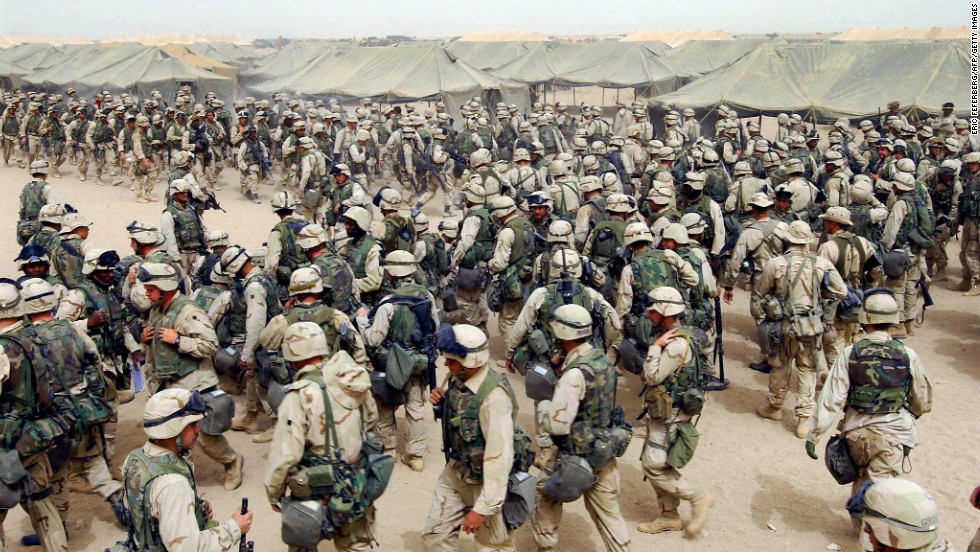
I think the last decade (2000-2010) is the key to understanding nowadays Middle East and the events of the second decade of the millennium. In September 2000, Israel prime minister Ariel Sharon made an unnecessary visit to the temple mount. Many Palestinians perceived it as an act of provocation which led to a violent uprising that lasted until 2005. In 2003 the US launched a full scale war on Iraq based on false intelligence. In April 2004 CBS news uncovered the scandalous misconduct in Abou Gharib prison in Iraq. In 2005 Israel unilaterally withdrew from Gaza which shortly fell in the hands of Hamas Islamic Militia Group. In 2006 AL-Qaeda in Levant (Lebanon) fired rockets at the north of Israel which led to the second Lebanese war. The war resulted in the death of 1360 Lebanese, 156 Israelis and the displacement of about a million Lebanese citizens.

In 2006 Al-Jazeera broadcast an investigative film about America’s ‘extraordinary rendition’ practices since September 11, 2001. The film would be called “Triangle of Anger”. After the tragic events of 9-11 the CIA carried out a program to hunt, interrogate and deliver potential terrorists to their home countries for further interrogations. Only too many of the detained “terrorists” were normal people leading a normal life who were wrongly flagged. Yousry Fouda, the producer of the film, managed to interview some of the victims. Their testimonies were bone chilling and the amount of injustice made to those people was simply outrageous. The US did not want to be blamed for human rights violations so they gave the dirty job to someone else. Fouda concludes his documentary saying: “Arab regimes, the west and the Islamists: A Triangle of Anger”.

In February 2004 the US air forces captured Ibrahim Awwad al-Samarrai and sent him to the infamous Abou Gharib prison. On December of the same year he would be released as “low threat” only to be sent to another prison called Camp Bucca. In 2009 he is released from Camp Bucca where he was radicalized. He then joins AL-Qaeda in Iraq. One year later he announces himself the leader of the Islamic State in Iraq. In Syria and Lebanon Al-Qaeda was spreading its wings. The events of the 2006 war were extremely polarizing and an influx of volunteers joined AL-Qaeda in the Levant. Later in 2011 the Islamic State in Iraq and Al Qaeda in Levant would join forced to be what is now known as The Islamic State in Iraq and Sham (ISIS).

If the 1st decade of the millennium witnessed the creation of a monster, the 2nd decade of the millennium witnessed the collapse of a whole region. 2011 will signal the beginning of the Arab spring. It started with Tunisia then Egypt then Libya then Syria and ended in Yemen. The common factor between all of them was: Anger. If the Tunisian and Egyptian revolutions were relatively restrained the Libyan, Syrian and Yemeni revolutions led to ongoing civil wars.

I, here, would like to focus on Egypt and why Egypt had to succeed if a different future was to be created in the Middle East. I also want to show how the world failed Egypt. When the revolution toppled the Mubarak oppressive regime the whole world congratulated the Egyptians for their peaceful revolution. In the first ever democratic elections in 2012 the people chose, unwisely, the Muslim Brotherhood. A mistake they would pay for direly in the very near future. When the people, after just one year, got fed up with the MB policies they took to the streets again. Only this time the Armed Egyptian Forces were ready to seize the country by fire and blood. Here is when the world failed Egypt. Under US law, the government must suspend foreign aid to any nation whose elected leader is ousted in a coup d’etat. The dovish Obama administration did nothing and the catastrophic Trump foreign policy empowered the military dictator. In France Mr Holland called in the Egyptian ambassador and expressed “deep concerns”. A few months later France would agree to sell Egypt a huge quantity of tactical weapons for riot control. The Renault armored vehicles would be seen in August 2013 dispersing the protesters in what is now called “Rabaa Massacre”. In 2015 Mr Holland signed a $6 billion arms deal making Egypt the first foreign country to purchase the French-made Rafale multipurpose jet fighter. The Egyptian money was more important than the French values for the French administration. The stability of an oppressive military dictatorship was more important than a democracy that was promising yet unstable to the American administration. Here is when the international values collapsed out of shame. This is when the whole world sent a clear message to the Middle East: Democracy is not for you. I am not blaming the failure of the Egyptian revolution on the west, I am just saying they are also responsible for the oppression and dissipation of the young and immature liberal movement.

To put things into context I will leave you here with some numbers to show you the effect of just the French support to dictatorship. The record of Egyptian security services is devastating: demonstrations dispersed by military means (the dispersal of the Rabaa Al Adawiya sit-in on 14 August 2013 in Cairo alone left over 1,000 dead); the incarceration of at least 60,000 political prisoners since 2013; thousands of extra-judicial executions and enforced disappearances (including 2,811 cases of enforced disappearance at the hands of the security services between July 2013 and June 2016). The European Union’s Foreign Affairs Council declared on 21 August 2013 that “the Member States have decided to suspend export licenses to Egypt for any equipment that could be used for domestic repression”, at least eight French companies – encouraged by one government after another – have nevertheless profited from this repression to reap record profits. Between 2010 and 2016 French arms deliveries to Egypt increased from EUR 39.6 million to EUR 1.3 billion. Finally, some companies have sold to the security services technologies for individual surveillance (AMESYS/NEXA/AM Systems); mass interception (SUNERIS/ERCOM); personal data collection (IDEMIA); and crowd control (Safran drones, an AIRBUS/THALES satellite, and Arquus (formerly RTD) light armored vehicles adapted to the urban environment). In so doing, they have all participated in the construction of a widespread surveillance and crowd control architecture aimed at preventing all dissent and social movement and leading to the arrest of tens of thousands of opponents and activists.

The rhetoric now in the Middle East is: It is either military dictatorship that is religiously moderate or another ISIS. The world chose to see that but they did not see us. They did not see that there was a third option. There was civil society movement, there was a liberal movement, there was a feminist movement. Yes, they were weak and immature and they do not represent a critical mass for change but they all were there. Small as they were they were loud and influential and they shook an organization like the Muslim Brotherhood to the core. Egypt could have been a regional power that is also a beacon of hope and a model for democracy for the rest of the Arabic speaking region. An Egyptian democracy could have broken that cycle of anger, it could have given us all hope. We failed because big portion of the public is uneducated and did not know better than electing what they thought “god fearing people”. We failed because our liberal and secular movement was too young and too immature. We failed because of all the realities the world saw in the Middle East they did not see us. Unseen, irrelevant and persecuted we left and the triangle of anger remained.

Reference:

https://www.scribd.com/document/382873255/Egypt-a-repression-Made-in-France#download&from_embed

https://www.theguardian.com/world/2013/jul/03/egypt-obama-us-mohamed-morsi-crisis

http:// https://www.youtube.com/watch?v=WBOPvb_tT5U

https://www.justiceinitiative.org/voices/20-extraordinary-facts-about-cia-extraordinary-rendition-and-secret-detention


Chapter 4: The Tragedy and the Aftermath of the Egyptian Revolution

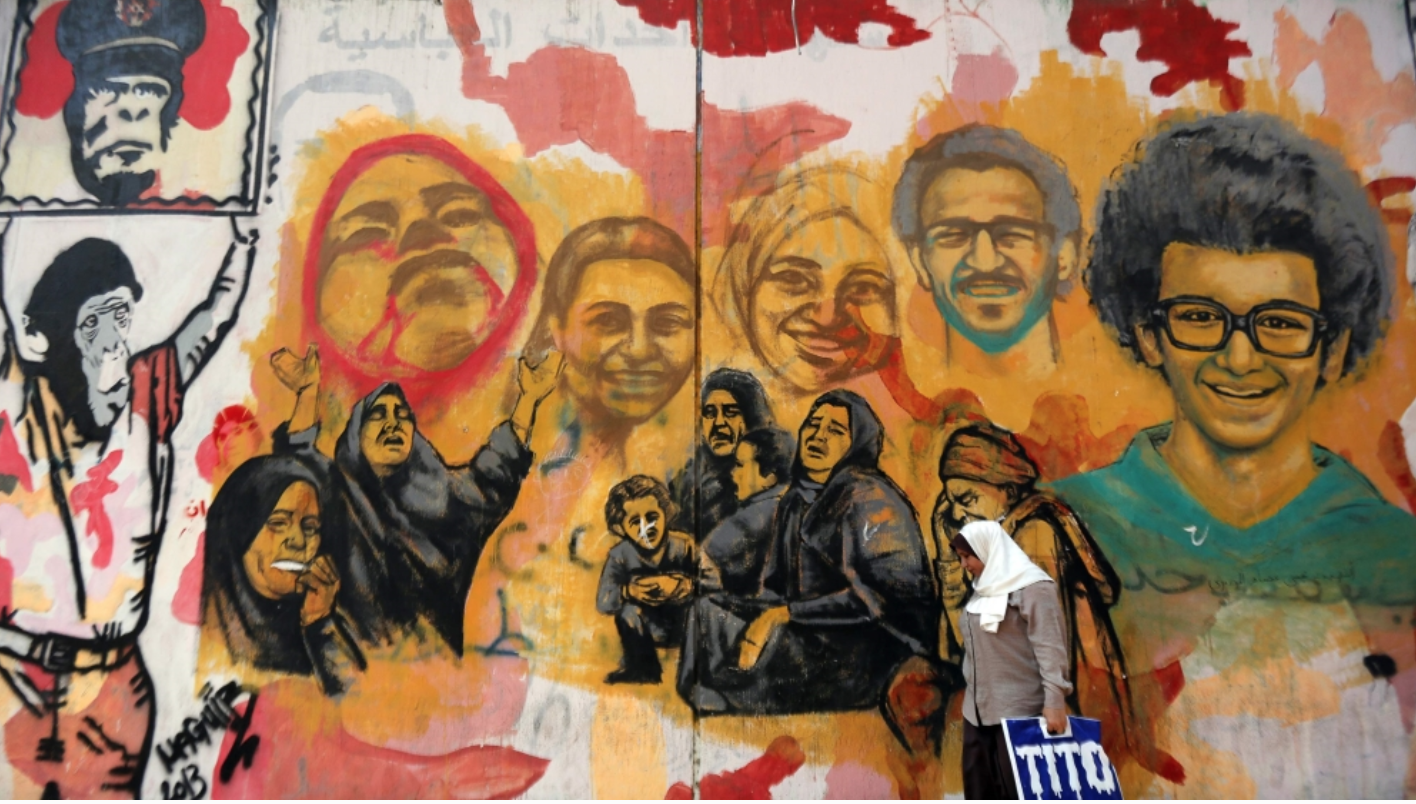
On the 14th of August 2014, I woke up to a call on my work phone from the head of security of the company I used to work for. The call was short and clear: stay home, do not come to work today. Supporters of the Muslim Brotherhood had been holding a massive sit-in for almost two months, protesting the military coup and the illegal detention of the former president, Mohamed Morsi. A few hours after the call, I heard gunshots. From my window in my small apartment in Nasr City, I captured a chilling video of civilians trying to escape the military’s heavy gunfire in the narrow side streets of my neighborhood. The events would later be referred to as the “Rabaa massacre.” Hundreds were shot in cold blood, thousands were captured and sent to high-security military prisons, and a wave of Islamic terrorism and military violence swept across the country.

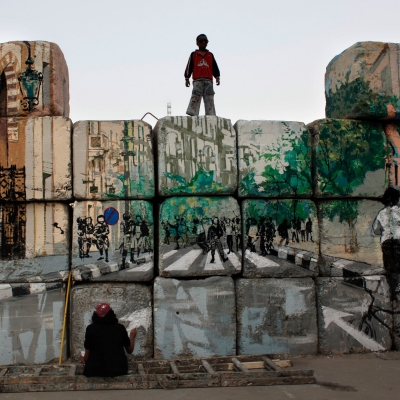
The head of the Egyptian Armed Forces lied when he promised he had no interest in ruling the country. General Abdelfattah El-Sisi ran for the presidency and won by a massive margin, securing more than 98% of the votes. Egypt is, to this day, ruled by a military dictatorship. I have never seen Egypt more depressed and grim. My revolutionary friends stopped talking about the revolution. Many activists were hunted down, and Egypt’s security forces began carrying out “systematic forced disappearances” targeting human rights activists and many citizens. As if that were not enough, security forces also began practicing extrajudicial executions.

The message was clear: get out or fall in line. The brain drain that followed the revolution is one of the most tragic events, with long-lasting implications for Egypt’s economy, development, and the fight for liberty for generations to come. Among my cohort that graduated from the American University in Cairo in biological sciences, only one out of 12 highly qualified individuals still lives in Egypt. I immigrated to France. My friend Ahmed Diab is continuing his postdoctoral studies in the US. My talented friend Dorra, a highly skilled programmer, moved to Berlin. Behairy, a mathematics genius, moved to Boston. Belal and his family relocated to Berlin. Barakat, one of the most talented graphic designers and the co-founder of G-Lounge, moved to Arizona with his wife Sara, who is one of the most influential and passionate leaders in biomimicry and sustainability. Three out of three of my former bosses emigrated with their families to Europe and the US. Many renowned writers, scientists, filmmakers, and artists, such as Alaa Al-Aswany, Amr Waked, and Belal Fadl, have also left the country. The list is long, sad, and terrifying.

When I visit Egypt now, I see the ruins of dreams. It feels like a walking dead country. The media continues to push military regime propaganda and empty promises. The value of the Egyptian Pound plummeted from 6 EGP to the Euro in 2010 to 20 EGP to the Euro in 2016. The percentage of people living below the poverty line rose from 16.7% in 2000 to a staggering 32.5% in 2018. The oppressive military regime still tries to convince the Egyptian people that they will reap the benefits of reform in the years to come, but the situation keeps getting worse.

Will Egypt survive another wave of uprising? What will happen in the future is uncertain, and it’s reasonable not to have a very positive outlook on what’s to come. Will the highly talented innovators, entrepreneurs, and executives ever return?

I have discussed this topic extensively with many of my friends who gave up and left. I can confidently say that they do not want to look back. They want to start over in the West, where their talents are appreciated, where human rights are respected, and where their humanity is valued. They seek a future for their families that is different from their sad and agonizing past. This is the modern tragedy of Egypt: the country has lost its heart and soul to the guns and tanks of the generals.

Chapter 3: Awakening and Doom

In a late study-night in my dorm room in Cairo Khan hotel in downtown Cairo, Ahmed Diab, a fellow biology student, asked me what I thought of Mubarak and his regime. That was in 2008 just after my return from a study abroad program in California. I remember that the general state of mind of Egyptians was that no one was happy but we did not really have many options. I told Diab that I think people have to be respectful to the leadership. I told him that Egyptians are used to have one ruler and they like to follow than to lead. From my experience in Egypt, no one really cared much about politics, liberty, freedoms, or social justice.

Diab was taken aghast by my answer and he presented a very eloquent and persuasive argument for democracy, peaceful transfer of power and that countries are like humans in that they need to grow. The political system has always been patronizing and assumed that Egyptians need guidance like children. The children have grown and now they became teenagers and they are not happy with the house rules. They want to create their own future. Like many Egyptians, I was so indifferent to the political system and whatever was happening in Egypt. I just wanted to graduate and start my career and live my life. Diab made me feel he is not speaking for himself and that there are many that share his frustration and his will to make a real change . He was very charged and had a lot of build up of frustration, disappointment and fear.

After we graduated in 2010 Diab went to Europe to continue his studies in biological sciences. I started my career at one of the giant European multinationals. For new year’s eve I went to Aswan with an American girl I met at University. As we tossed our champaign glasses to celebrate the end of a very eventful 2010 on the rooftop of a local hotel in Aswan old market breaking news came off that a number of bombs exploded in a christian mass in the church of Saints in Alexandria. She was devastated by the images coming from the explosion site and I was gutted and angry. Of course El-Adli and his policemen blamed it on Islamists. The police miraculously arrested the people who did the attack in less than a week. One of the detainees was killed during interrogations and signs of torture were visible on his body and face. Weeks before that some policemen killed a young guy called Khalid Saed in Alexandria and claimed he chocked on a weed bag. My American friend would lose her father to a suicide attack later in Baghdad. Two events that changed her life forever. In the meanwhile, in Tunisia Ben Ali fled to Saudia Arabia after the Tunisians effectively paralyzed his regime by a series of peaceful demonstrations. The Arab spring began and there was no way back. Diab’s vision came true.

My friend Belal was the most excited by the news coming from Tunisia and he was following a facebook group called “We are all Khalid Saed” that called for Egyptians to go en mass in the streets in the 25th of January which is the police day to protest against the violence and systematic torture practiced by the police. As indifferent and pessimistic as ever I told him it is never going to happen. I did not even believe Belal himself would go. I have eye-witnessed him miss important business meetings and commitments just because he wanted to sleep a few hours more. In the early hours of the 25th of January Egyptians against all the odds took to the streets. Belal went, he woke up late, but he went.

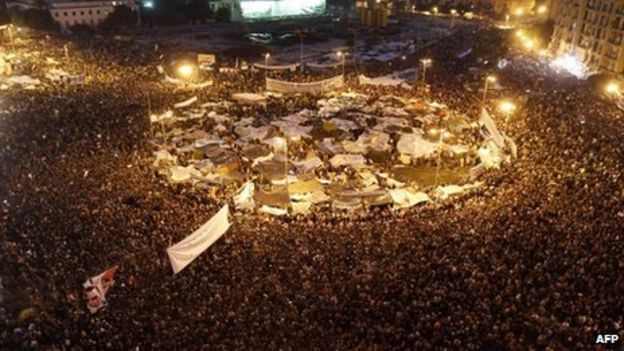
I followed the news on facebook and twitter then the state ordered telecommunication companies to cut the internet. The state TV was showing what they wanted us to see which was silly, lame and utterly unbelievable. In the 28th of January I decided to go to Tahrir Square and see for myself what is unfolding. I went with a group of friends and we got stuck on October bridge on our way to downtown Cairo. Then we heared people running and screaming in the direction of Talaat Harb Square and Reyad Square. Then there was gunshots, camels, and complete chaos. The brave Muslim Brotherhood youth stood solid against the vicious attack by the police and Mubarak supporting thugs and it drew a lot of sympathy for the otherwise politically persecuted group.

In the days before the 28th of Jan my friends were expecting the police to use brutal force to suppress the protests. I argued that the numbers are huge and they cannot possibly shoot and kill so many people. My friends counter-argued that all they need to kill is just a few. I argued that there is no enmity between the protests and the police. All they are asking for is political reform and for human rights to be respected. In addition most of the police force is composed of “central security” who are young men with no political agenda doing military service and they would never shoot at their brothers and sisters. I was wrong.

After a few weeks of sit-ins and protests Mubarak stepped down and was arrested and trialed for corruption charges and giving the green light to use brutal force with protestors. During the few days I spent in the Tahrir Square everyone was positive, we were outlining a vision for the country we want and everyone seemed accepting and open-minded. The brotherhood betrayed the revolution and their own people and struck a deal with the military and Mubarak men and agreed on a transition period where the Supreme Council of Armed Forced (SCAF) would rule the country. The agenda was to enforce stability and resume life as usual. Only there was nothing usual or normal anymore in the Egyptian streets. In a very quick succession of events the true colors of the extremist, religious and narrow minded Egyptian society showed. Revolutionaries suddenly became traitors rather than liberators. Liberal and secular leaders became agents to western imperialism rather than enlightened intellectuals wishing to see Egypt in a better place. The people I met in the square disappeared. We, the liberals, became irrelevant.

Chapter 2: The Middle East

Growing up in the Middle East makes one aggressive. From a very young age I was told that life is hard and to get what you want you have to fight for it. The problem is, in Egypt, there are almost no rules. The opportunities for success are very limited and to win one has to be a ruthless competitor. Once one occupies a place in society they have to protect it because others will push and shove to overthrow your success and take your place.

My generation grew up with no wars and in a period of prosperity, peace and economic growth. However, if there is a single trait that would define Egyptians, it is that they are uptight and stressed out. In my university years, in The American University in Cairo, I tried to seize the opportunity to grow and unwind. The social pressure into conformity was crushing. The problem is that each social circle would judge and try to crush and alienate other different social circles. Almost every friend I talked to would tell me “If you maintain your bubble you will be safe and happy”. There are 20 million people living in Cairo. What kind of bubble can be truly safe in such a dense population.

The Middle East is also unforgiving and cruel. As a child in a Muslim family I was taught that Copts are impure and filthy. One of my very first memories is when I saw our neighbor get rid of a water bottle because my christian friend (6 years old) drank from that bottle. I was told not to sit next to christian students in my class room. I witnesses countless situations of bullying and abuse to the christian minority for no reason but that they were Christians. Religion is the poison of the Middle East.

The Middle East lives in an existential crisis. The internet generation wants to live freely, have fun and exhaust the limits of the possible. The jungle-like society they live in; however, makes it impossible to live without fear, insecurity and a perpetual worry about the future. Even in the most democratic model in the Middle East, Israel, everyone is stressed out. No one wants to do obligatory military service where your humanity is brutally erased, no one wants to live with neighbors that hate them from the bottom of their hearts for wars waged by their grand grand parents and definitely no one wants to live in a region where dying is very easy.

As one of my American friends put it “Everyone I know in the Middle East is suffering from some kind of PTSD”. Now it is not enough to run away, I have to find a place to run to.

Chapter 1: Migration

I grew up in the desert of Egypt’s west sahara. It is a unique experience growing up in an Oasis. Oases defy nature, they defy all the odds of existence. One would think such defiance comes with great force and protest, but in fact my oasis was just calm. Nothing really happened in El-Dakhla of Egypt. People were peaceful and quiet, the weather was stable and predictable. We had no tornadoes, no hurricanes, no volcanic eruptions, no flash flood, just nothing. I grew up in isolation and my family visits to the capital, Cairo, always made me feel there is something bigger, something more dynamic, something more living. Defying all the odds of growing up in a middle class family that lives 8000 km away from the capital, I joined the elitist university of that capital. My diaspora began.

Unlike El-dakhla, Cairo was not peaceful at all. People are rude and the pace of life is just too fast to have any peace of mind. The sound of car sirens fills the polluted air with unbearable sense of pressure. I hated Cairo.

2 million years ago early humans are believed to have started the first true migration events. There were no pressuring forces behind the migration of homo erectus from Africa. Africa had everything in abundance: rivers, game, and an extremely stable nature. The migration of humans never stopped ever since. The Human diaspora began.

Maybe humans are nomads by nature. Maybe humans always want to explore beyond their oasis and in this exploration a yearning is born. A yearning that is never fulfilled.